
MSK-113-PM Semi-Automatic Vacuum Sealer with Electrolyte Injection and Diffusion for Pouch Battery Fabrication
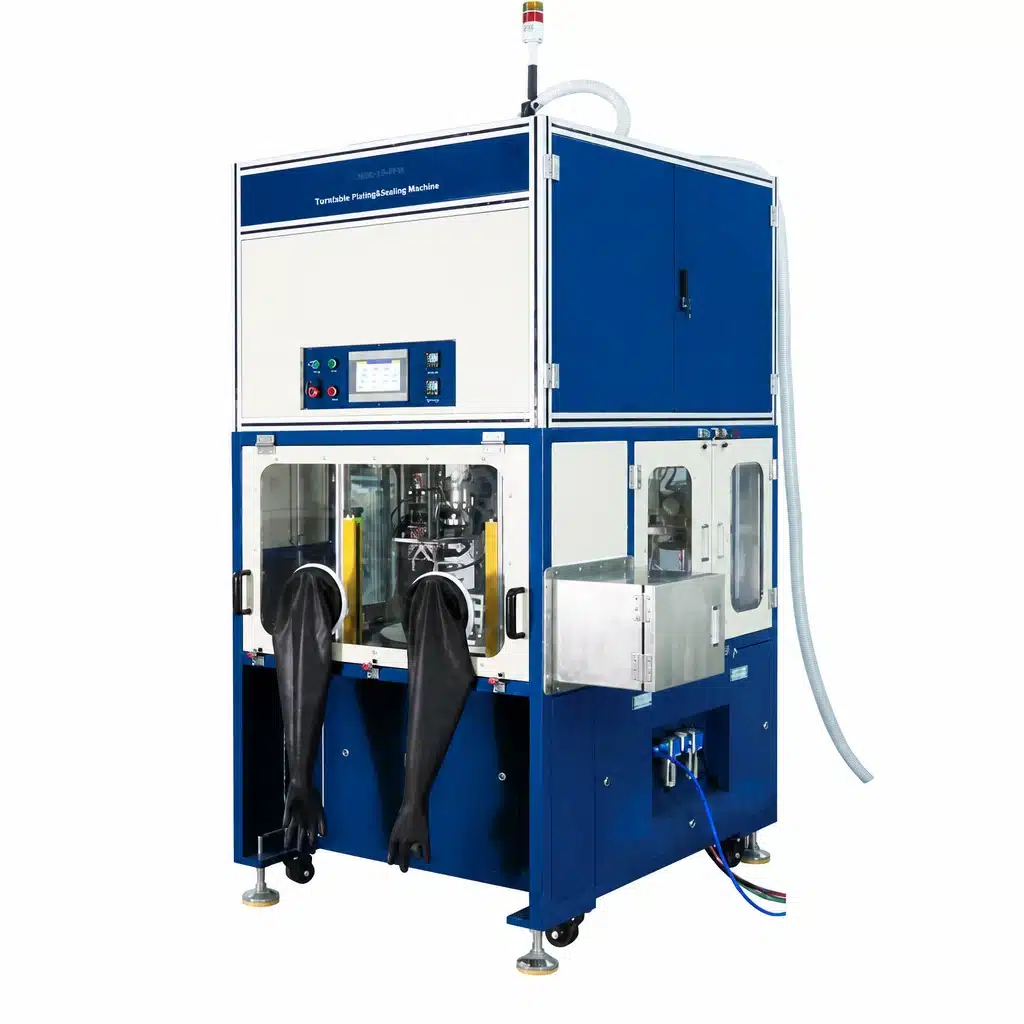
The MSK-113-PM is engineered to support the complex process of pouch battery manufacturing by combining electrolyte injection, diffusion, degassing, and vacuum hot sealing into a streamlined semi-automatic system. This equipment is particularly suited for pilot-scale production, ensuring precise control over each step to enhance battery cell quality and consistency.
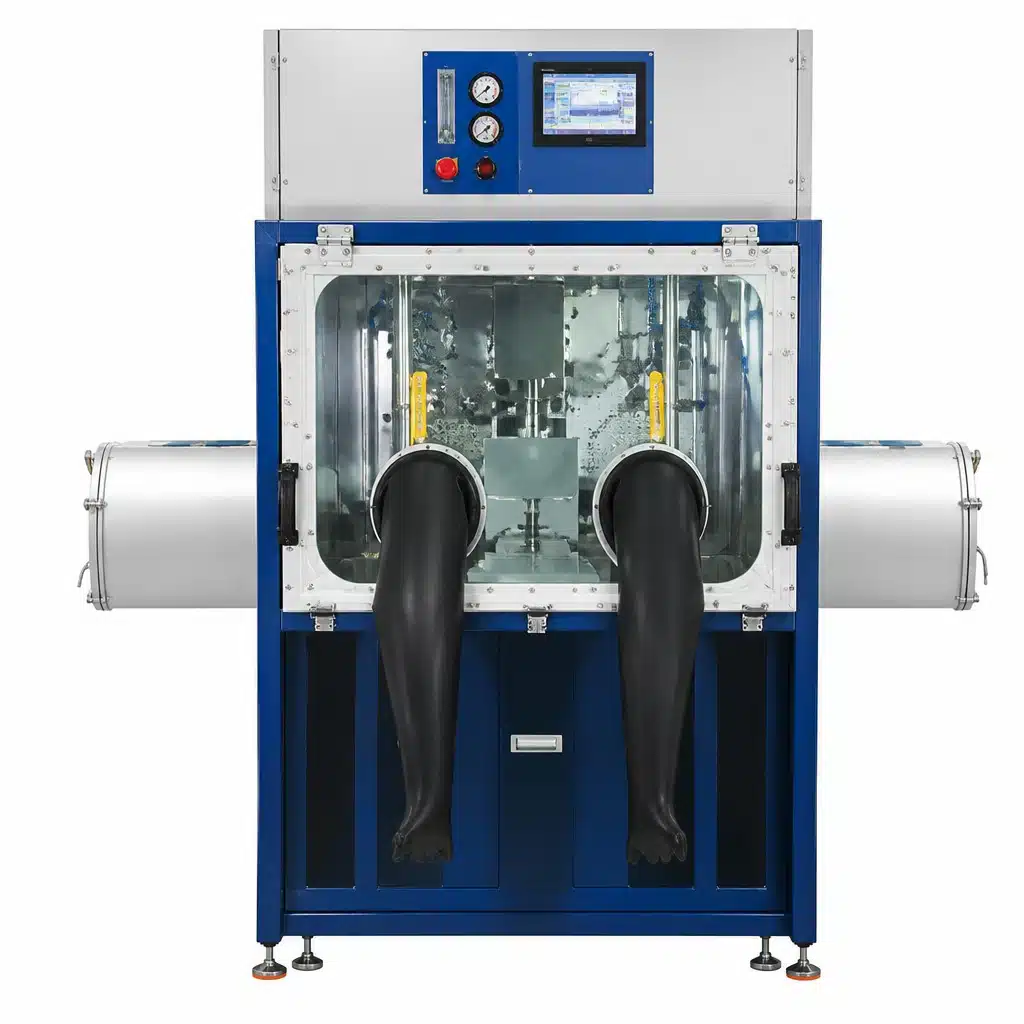
At the core of the MSK-113-PM is a four-position rotational platform that facilitates a continuous flow of operations: loading the pouch cell, injecting electrolyte, vacuum degassing and diffusion to promote electrolyte wetting, and finally vacuum hot sealing to secure the cell. The entire process occurs within an airtight chamber equipped with a front observation window and integrated gloves, allowing operators to handle cells in an oxygen- and moisture-free environment. Continuous purging with high-purity inert gas maintains the dry atmosphere essential for optimal electrolyte performance.
Key Features
- Four-position rotational platform enabling sequential cell loading, electrolyte injection, vacuum degassing/diffusion, and vacuum hot sealing.
- Airtight chamber with front observation window and operation gloves for moisture- and oxygen-free handling.
- Two airtight ante-chambers with pneumatic isolation gates for safe cell transfer in and out of the main chamber.
- Large LCD touchscreen for precise control of electrolyte volume, injection rate, vacuum parameters, sealing temperature, and timing.
- Electrolyte plunger metering pump included for accurate filling with 0.3% volume accuracy.
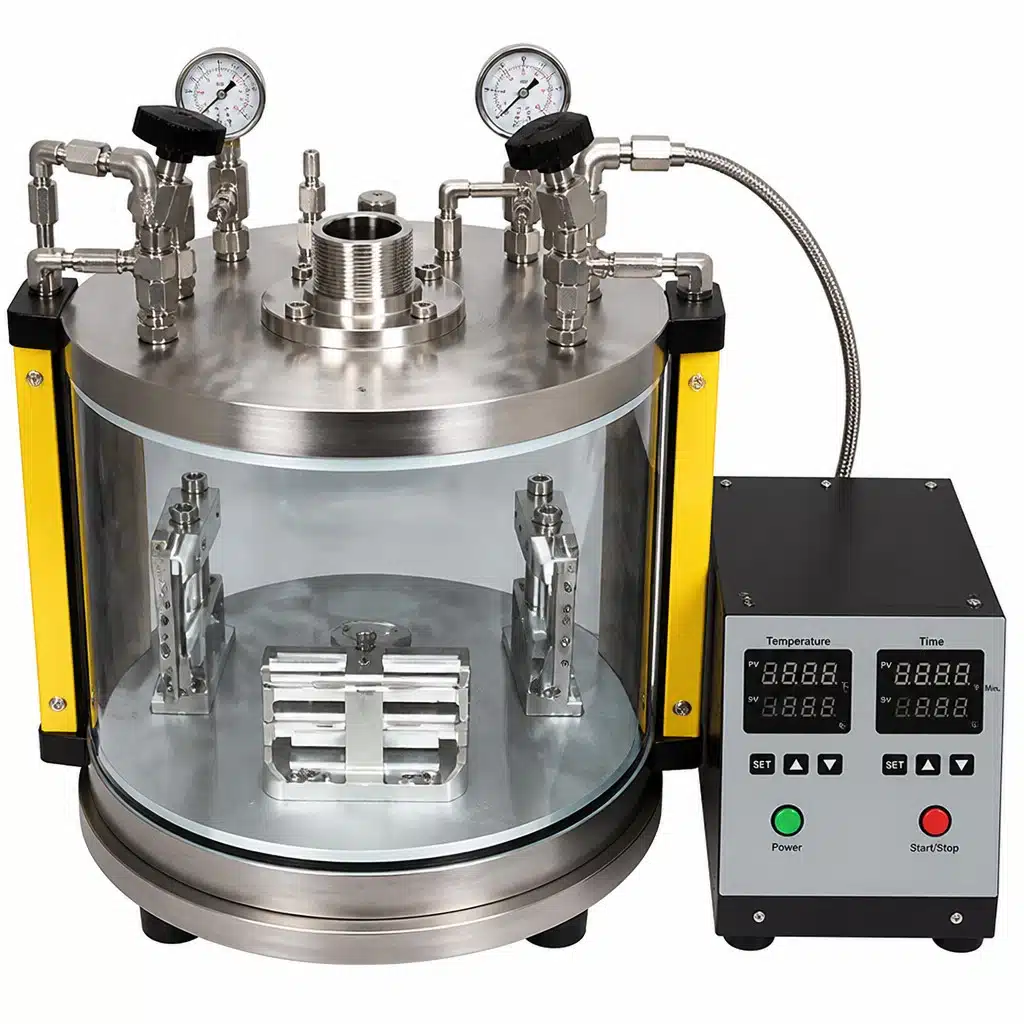
- Adjustable vacuum degassing range from -95 to 0 kPa with customizable dwell time and cycles.
- Independent dual digital temperature controllers for sealing dies with temperature range 50–250°C and ±3°C accuracy.
Technical Specifications
| Parameter | Specification |
|---|---|
| Power Supply | Three-phase AC 380 V, 50 Hz (Three-phase AC 220 V version available on request) |
| Power Consumption | 6 kW |
| Working Gas | High purity inert gas (Ar preferred), 0.5–0.8 MPa, dew point < -60°C, continuous purging required |
| Pouch Size Adaptability | Max L180 × W150 mm; Min L62 × W45 × H6 mm (larger sizes available on request) |
| Electrolyte Dispenser | Plunger metering pump with 0.3% accuracy; volume and injection rate adjustable via touchscreen |
| Vacuum Degassing | Vacuum range -95 to 0 kPa; dwell time 0–99 seconds adjustable |
| Sealing Die | Width 4 mm (customizable); length ≤ 180 mm |
| Seal Pressure | 0.3–0.6 MPa adjustable; approx. 0.1 L compressed air per seal |
| Sealing Temperature | 50–250°C adjustable; recommended 180–190°C; ±3°C accuracy |
| Sealing Time | 3–4 seconds per cell; ~30 seconds total for injection and sealing |
Typical Applications
This system is ideal for pilot-scale pouch battery manufacturing, especially for lithium-ion and advanced chemistries requiring strict moisture and oxygen control during electrolyte filling and sealing. It supports assembly of pouch cells with precise electrolyte dosing and vacuum processing to improve electrolyte wetting and cell integrity.
Configuration & Operating Notes
The MSK-113-PM requires operation within a dry room environment to maintain optimal moisture control. Two rotary vacuum pumps (not included) are necessary for vacuum diffusion, degassing, and sealing steps. The sealing dies should be cleaned after each use once cooled to prevent corrosion from electrolyte residues. Regular inspection of sealing die surface smoothness and level is recommended; damaged dies should be replaced to ensure sealing quality.
Compressed air or gas cylinders used for seal pressure must include a two-stage pressure regulator to maintain safe and consistent pressure within 0.3–0.6 MPa. The airtight chamber design with pneumatic isolation gates and inert gas purging protects cells from moisture and oxygen exposure throughout the process.


