
Produktübersicht
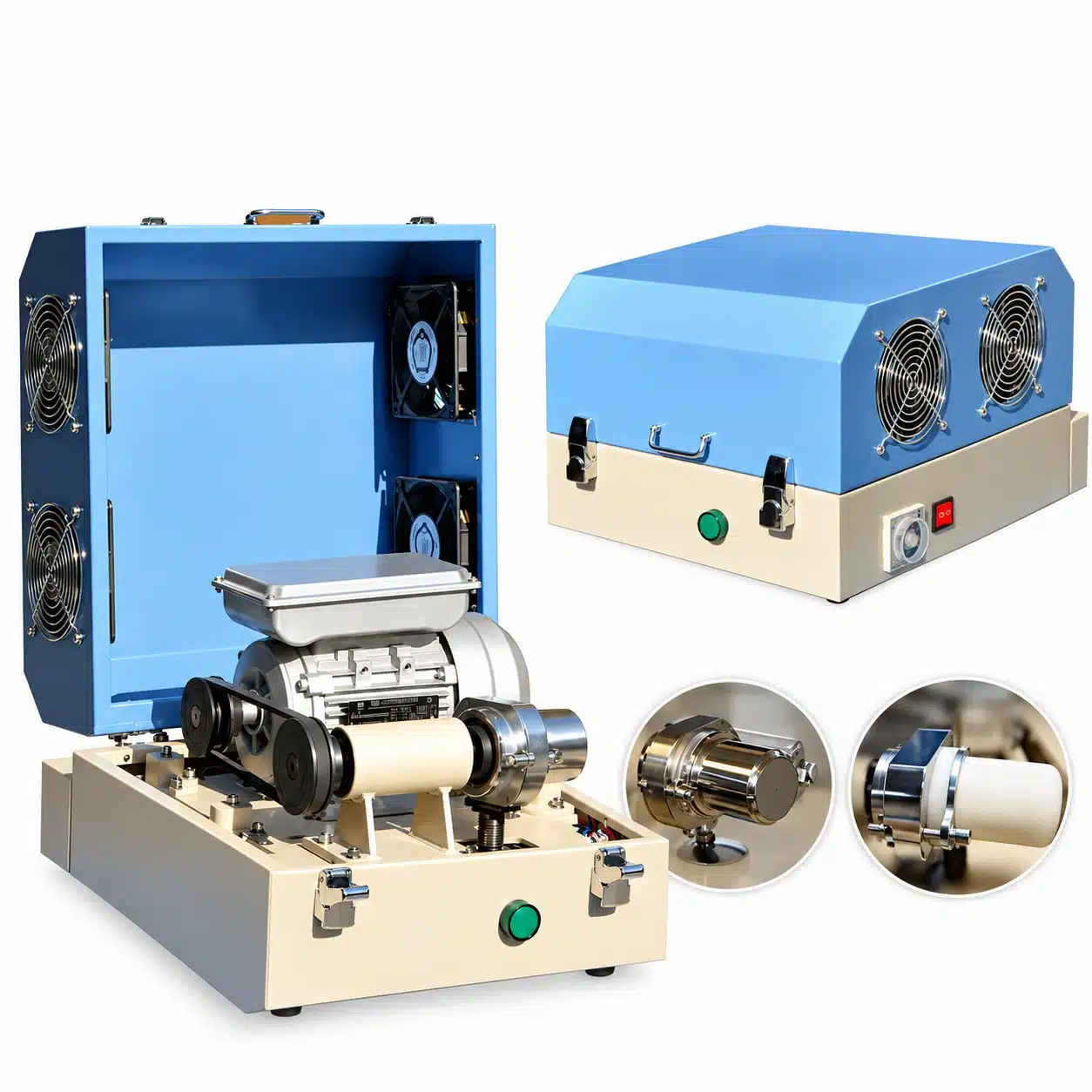
Die MSK-SFM-3 is a compact, high-energy three-dimensional vibratory ball mill designed for rapid grinding, mixing, homogenization, and fine particle preparation in laboratory environments. Featuring a combined shaking, vibration, and oscillation mechanism, the machine generates high-impact milling energy for processing small quantities of research materials.
Unlike conventional ball mills that primarily rely on rotational motion, the MSK-SFM-3 uses a multidirectional milling movement to promote repeated collisions between grinding media and sample particles. Its three-dimensional vibration mechanism provides effective mixing and grinding action, making it suitable for processing powders, solid materials, suspensions, and pastes under appropriate operating conditions.
The equipment operates at a fixed high-speed vibration frequency of up to 1200 RPM and is equipped with an adjustable mechanical timer ranging from 0 to 30 minutes. The compact benchtop design is particularly suitable for small-batch experimental work, materials research, powder formulation, and laboratory sample preparation.
A variety of compatible milling jars are available, including stainless steel, nylon, alumina, tungsten carbide, and agate configurations. Selected jar options can be combined with suitable grinding media to accommodate materials with different hardness levels, chemical properties, and contamination requirements.
The MSK-SFM-3 is suitable for research in ceramics, metallurgy, battery materials, metal oxides, geology, chemical engineering, and advanced functional materials. Its compact structure and versatile milling options make it a practical choice for universities, research laboratories, and industrial R&D facilities.
Wichtigste Merkmale
- High-Energy 3D Milling Motion: Combines shaking, vibration, and oscillation to create repeated high-impact interactions between grinding media and sample materials.
- High-Speed Operation: Fixed vibration frequency of up to 1200 RPM for efficient small-volume grinding and homogenization.
- Wet and Dry Milling: Suitable for processing powders, solids, suspensions, and pastes using compatible grinding containers.
- Multiple Grinding Jar Options: Compatible with selected stainless steel, nylon, alumina, tungsten carbide, and agate milling jars.
- High-Throughput Jar Option: Selected four-cavity stainless steel jars can support simultaneous preparation of multiple small samples.
- Mechanical Timer: Adjustable operating time from 0 to 30 minutes, with cooling intervals recommended between milling cycles.
- Fine Particle Processing: Suitable for micron-scale and selected submicron powder preparation under optimized grinding conditions.
- Compact Benchtop Design: Suitable for laboratories where workspace efficiency and convenient sample processing are important.
- Optional Air Cooling: Compatible forced-air cooling equipment may be used to help manage grinding jar temperature.
- Versatile Research Applications: Suitable for ceramics, battery materials, metallic powders, mineral samples, chemical compounds, and other advanced research materials.
Technische Daten
| Modell | MSK-SFM-3 |
|---|---|
| Produkttyp | High-Energy 3D Laboratory Vibratory Ball Mill |
| Milling Mechanism | Three-dimensional shaking, vibration, and oscillation for high-impact material grinding. |
| Betriebsspannung | 208–240V AC, 50/60 Hz. |
| Rated Power | 300W. |
| 110V Operation | Requires a suitable step-up transformer rated at approximately 750W or above, subject to electrical compatibility verification. |
| Schwingungsfrequenz | Fixed high-speed oscillation, up to 1200 RPM. |
| Speed Adjustment | Fixed-speed configuration; variable-speed control is not specified for this model. |
| Timer Type | Built-in mechanical timer. |
| Timer-Bereich | 0–30 minutes. |
| Recommended Running Time | Continuous operating time should remain below 30 minutes. Allow adequate cooling between cycles to prevent overheating. |
| Grinding Modes | Wet milling and dry milling. |
| Suitable Sample Forms | Solid materials, powders, suspensions, and pastes, subject to jar and media compatibility. |
| Recommended Feed Size | Less than 1 mm. |
| Particle Size Performance | Material-dependent. Median particle sizes (D50) approaching 0.1 µm have been reported for selected oxide ceramic materials under optimized milling conditions. |
| Milling Jar Availability | Optional; select a compatible jar according to the processing application. |
| Milling Jar Materials | Stainless steel, nylon, alumina, tungsten carbide, agate, and selected specialized materials. |
| Stainless Steel Jar Option | 80 mL stainless steel grinding jar with compatible stainless steel milling balls. |
| Nylon Jar Option | 80 mL nylon grinding jar with compatible zirconia grinding media. |
| High-Throughput Jar Option | Four-cavity stainless steel jar with approximately 9 mL nominal volume per cavity. |
| Alumina Jar Option | Alumina grinding jar with protective stainless steel jacket; confirm actual capacity and compatibility. |
| Additional Jar Options | Selected tungsten carbide, vacuum-compatible stainless steel, acrylic, and other specialized jars may be available upon request. |
| Geräuschpegel | Approximately 87 dBA under the referenced test condition: measured at about 1 ft with the lid open and stainless steel milling balls in the jar. |
| Optional Cooling | External forced-air cooling equipment may be available for milling temperature management. |
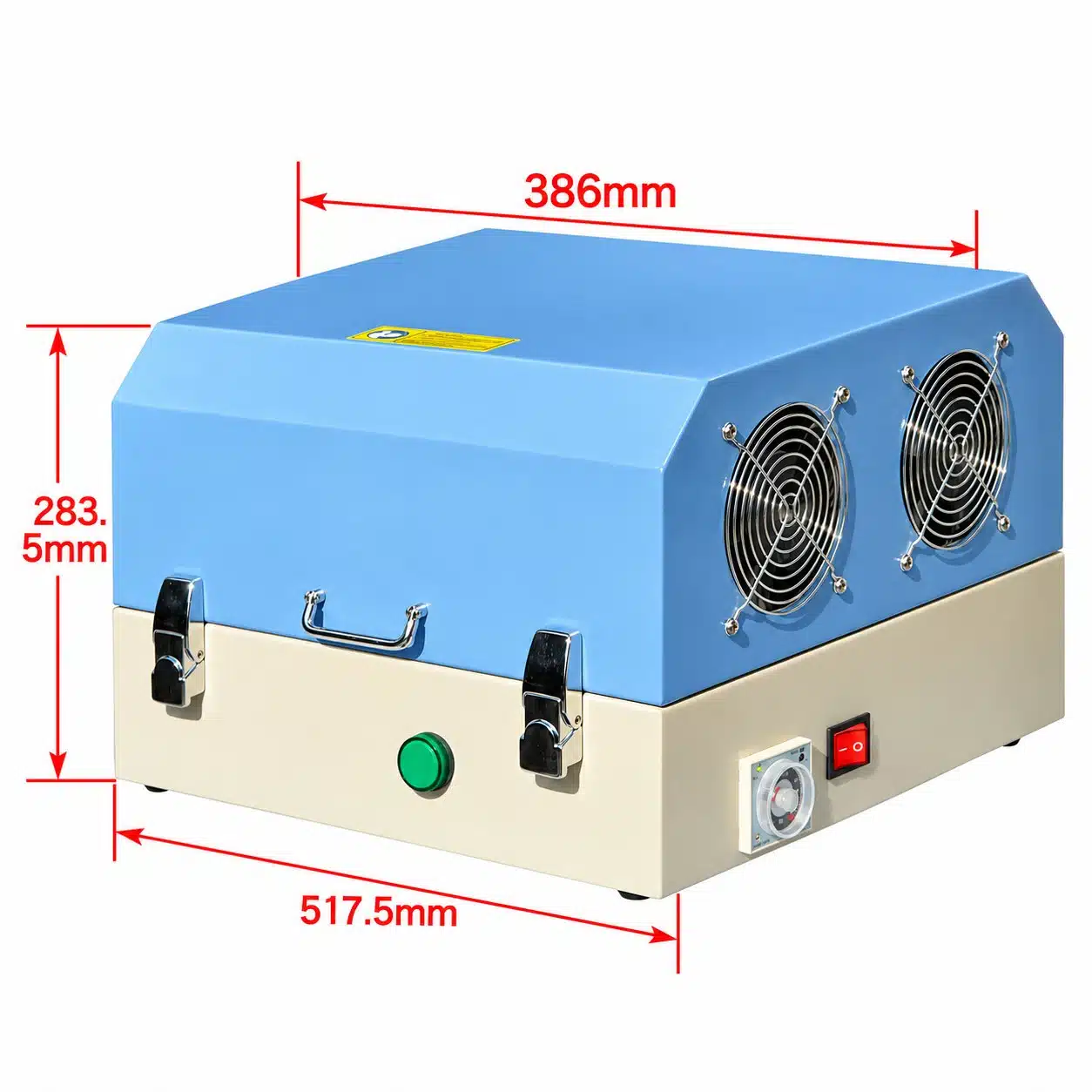
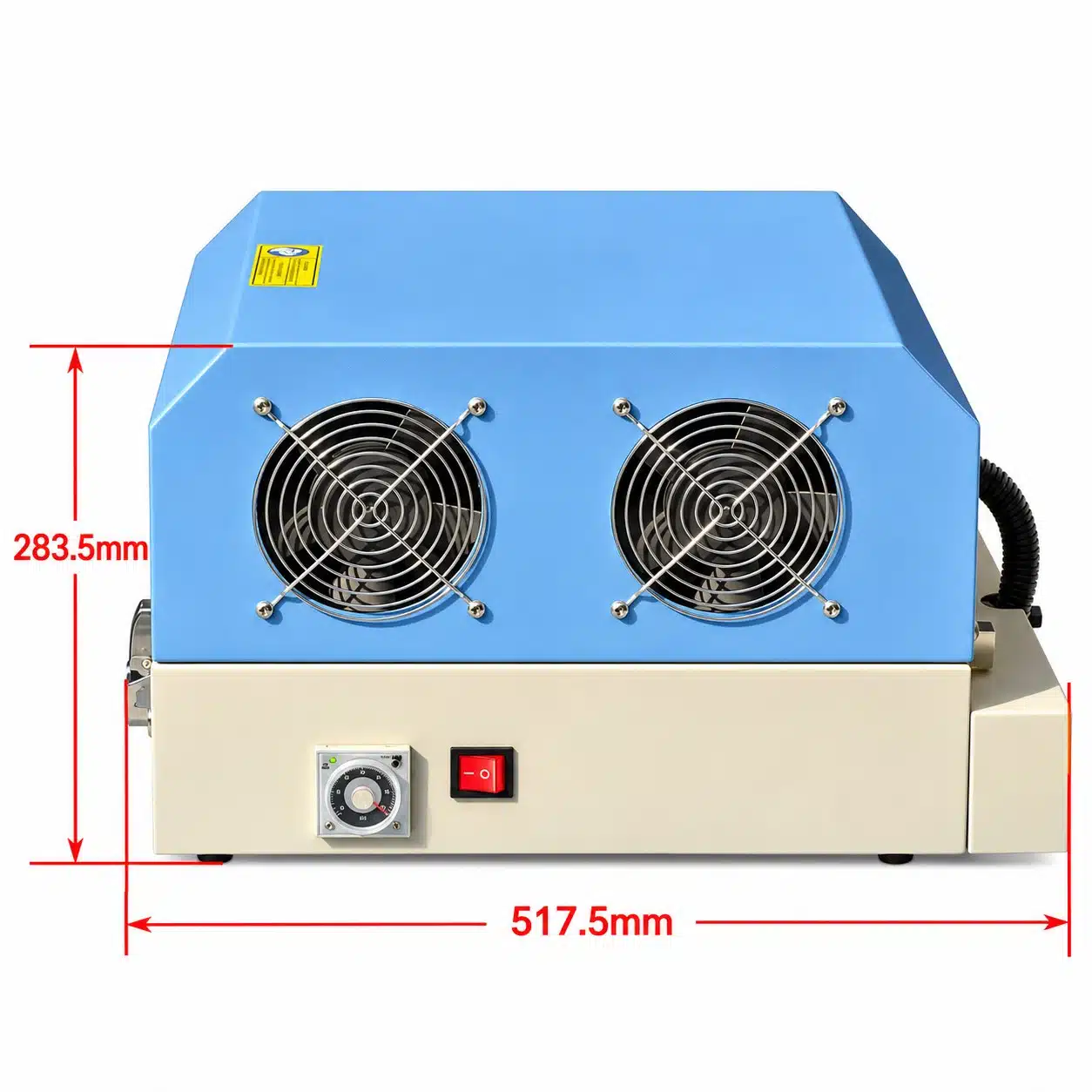
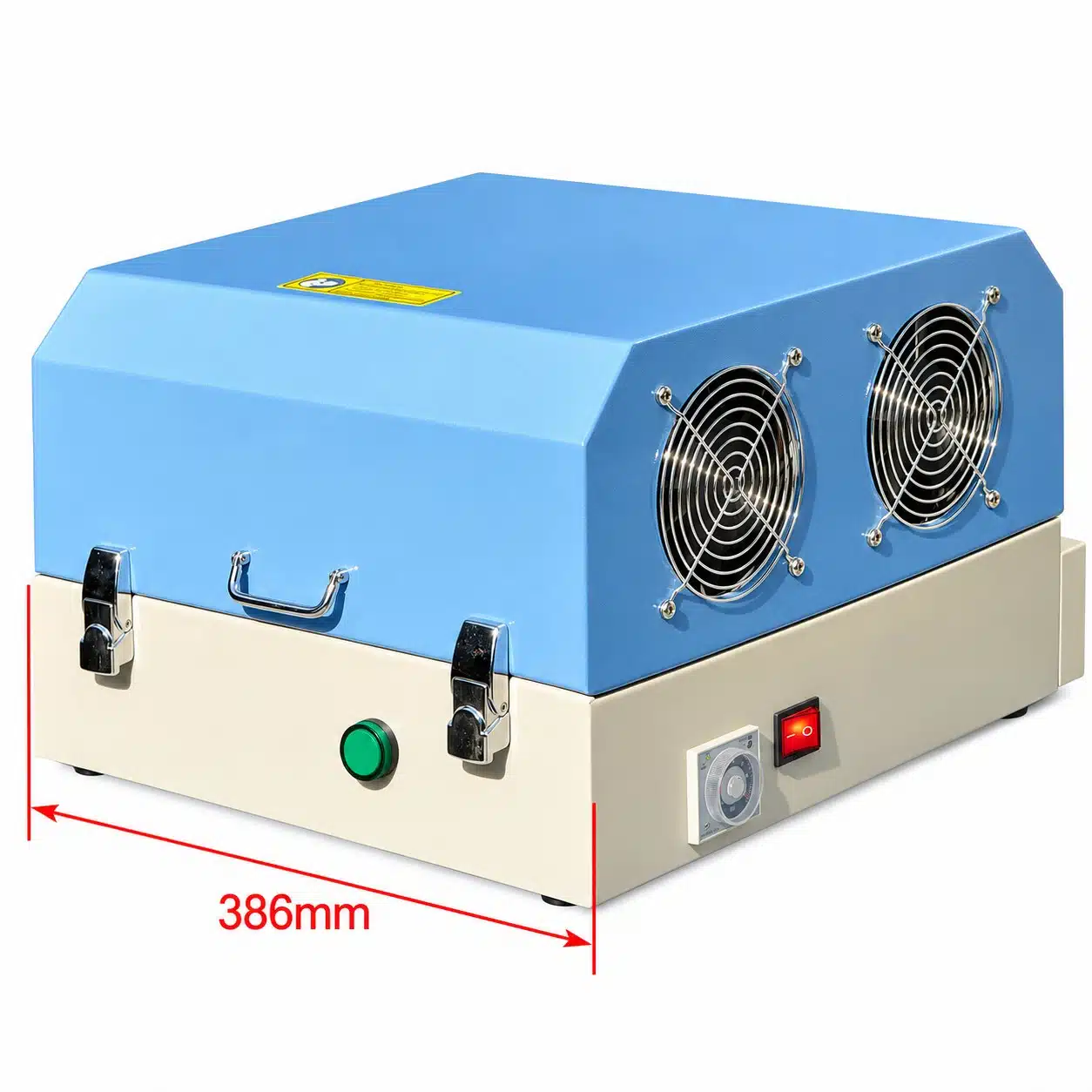
| Product Dimensions | 386 × 517.5 × 283.5 mm (L × W × H). |
| Nettogewicht | Approximately 40 kg (88 lbs). |
| Shipping Dimensions | 27″ × 23″ × 24″ (L × W × H). |
| Shipping Weight | 135 lbs. |
| Einhaltung der Vorschriften | CE documentation should be confirmed for the actual supplied configuration. NRTL or CSA certification is not included in the stated specifications. |
| Garantie | A two-year warranty may be offered subject to the final written sales and warranty terms. |
Milling Jar Options & Grinding Media
The MSK-SFM-3 supports different milling jar configurations for processing laboratory samples with varying physical and chemical properties. Selecting the appropriate jar material and grinding media is important for achieving effective particle size reduction while minimizing unwanted contamination and mechanical wear.
| Milling Jar | Description & Applications |
|---|---|
| 80 mL Stainless Steel Jar | Suitable for selected metal powder grinding and general-purpose laboratory milling applications. Use compatible stainless steel grinding balls. |
| 80 mL Nylon Jar | Suitable for selected laboratory powder processing applications where a nonmetallic container is preferred. Compatible zirconia media may be used. |
| Four-Cavity Stainless Steel Jar | Supports up to four individual small samples, with approximately 9 mL nominal capacity per cavity, for comparative experiments and material screening. |
| Alumina Jar with Protective Jacket | Suitable for selected ceramic and metal oxide materials using compatible ceramic grinding media. Confirm the jar capacity and fixture compatibility. |
| Tungsten Carbide Jar | Optional hard, wear-resistant grinding container for selected applications involving relatively hard materials. |
| Agate Jar | May be selected for compatible fine powder preparation applications where a mineral-based grinding surface is preferred. |
| Specialized Jar Options | Selected vacuum-compatible, acrylic, and other specialized milling jars may be available subject to equipment compatibility. |
Jar Selection Note: Milling jars and grinding balls are optional unless specifically included in the quotation. Use compatible jar and media combinations and avoid mixing stainless steel and ceramic grinding components where doing so could cause damage or contamination.
Optional Air Cooling System
High-energy vibratory milling generates heat through repeated grinding media impacts and friction. Temperature management may therefore be important when processing heat-sensitive materials, ductile metals, polymers, or powders requiring controlled milling conditions.
A compatible external forced-air cooling system may be selected to help remove heat from the milling chamber and reduce temperature buildup during operation. Cooling performance depends on the grinding jar material, operating conditions, ambient temperature, airflow arrangement, and sample characteristics.
Optional air cooling does not eliminate the need for cooling intervals. The mill should still be operated within its approved duty cycle and should not be run continuously beyond the specified operating limit without confirmation of a suitable operating procedure.
Anwendungen
The MSK-SFM-3 is designed for laboratories requiring high-energy sample grinding and mixing in relatively small quantities. Its multidirectional milling movement makes it suitable for a variety of experimental material preparation tasks.
- Ceramic powder grinding and fine particle preparation
- Metal oxide and advanced functional materials research
- Lithium-ion battery and solid-state battery materials preparation
- Metal powder mixing and laboratory material processing
- Mineral and geological sample preparation
- Wet and dry powder grinding and homogenization
- Laboratory suspension and paste mixing
- Experimental material formulation and comparative studies
- High-throughput processing of selected small-volume samples
- University, research institute, and industrial R&D applications
Optional Accessories & Replacement Parts
Compatible grinding jars, grinding media, and selected maintenance accessories may be available for the MSK-SFM-3. Final availability depends on the machine configuration and specific laboratory requirements.
| Accessory | Beschreibung |
|---|---|
| Stainless Steel Milling Balls | Selected ball sizes including 6, 8, 10, 12, 15, and 20 mm for compatible stainless steel milling jars. |
| Ceramic Grinding Media | Compatible zirconia and alumina grinding balls for selected nonmetallic milling jars. |
| Sealing Gaskets | Replacement sealing components for compatible milling jar assemblies. |
| Motor Drive Belt | Replacement drive belt for the vibration and milling drive mechanism. |
| Base Cushion Springs | Replacement spring components used in the vibration support assembly. |
| Maintenance Tools | Selected open-end wrenches and hex wrenches for compatible maintenance operations. |
| Power Cord | Compatible replacement power cable; plug requirements should be confirmed. |
| Drive and Mounting Assembly | Selected replacement gearbox, drive components, and milling container mounting parts. |
| Forced-Air Cooling Unit | Optional external cooling equipment for selected temperature-sensitive grinding applications. |
Operating Guidelines & Safety Notes
- Short Milling Cycles: Keep continuous milling time below 30 minutes and allow sufficient cooling intervals between operating cycles to reduce overheating risks.
- Sample Feed Size: Crush bulk materials to a suitable size before milling. Recommended input particle size is below 1 mm.
- Grinding Media Selection: Select ball sizes and materials according to the milling jar, sample hardness, and required particle size. For small alumina jars, compatible grinding media below 10 mm may be appropriate.
- Material Compatibility: Stainless steel jars are suitable for many metallic materials. For selected oxide and ceramic powders, use appropriate nonmetallic jars with compatible grinding media.
- Avoid Incompatible Components: Do not use stainless steel grinding balls inside alumina jars. Avoid incompatible combinations of steel and ceramic grinding components that could damage the jar or contaminate the sample.
- Temperature Management: Monitor the temperature of milling jars during operation, particularly when processing ductile, temperature-sensitive, or difficult-to-grind materials.
- Glovebox Installation: The referenced application guidance specifies nitrogen rather than argon for certain glovebox installations. Do not assume argon compatibility. Verify atmosphere suitability, electrical safety, heat dissipation, and operating conditions before any glovebox use.
- Noise Exposure: The stated noise measurement is approximately 87 dBA under the specified open-lid test conditions. Suitable noise protection and enclosed-lid operation should be considered where required.
- Particle Size Results: Final grinding performance depends on feed size, sample hardness, milling media, grinding jar material, sample loading, and processing duration.
- Electrical Installation: Confirm the local power supply, transformer capacity, protective grounding, and suitable electrical plug before installing the machine.
- Routine Maintenance: Inspect the drive belt, springs, jar mounting fixtures, gaskets, and moving components regularly according to the equipment operating instructions.
Configuration & Warranty Note: Milling jars, grinding media, cooling equipment, maintenance parts, and other accessories are optional unless expressly included in the final quotation. Warranty coverage, including any two-year warranty offering, and CE documentation must be confirmed in the written PENGXIN Machinery sales terms. Achievable particle size and actual grinding performance are material-dependent and are not guaranteed for every application.


