
HP-1350X Resistance Heated Pellet Pressing Furnace for Ceramic and Metallic Materials, Up to 1350°C and 100 MPa in Oxygen Atmosphere
The HP-1350X is engineered to facilitate precise pressing and sintering of ceramic and metallic pellets under controlled atmospheres, including oxygen. It is particularly suited for research into the effects of oxygen pressure on functional oxide ceramics, enabling experiments that require both high temperature and high pressure conditions. The system accommodates pellet diameters ranging from 10 to 12.7 mm, providing flexibility for various sample sizes.
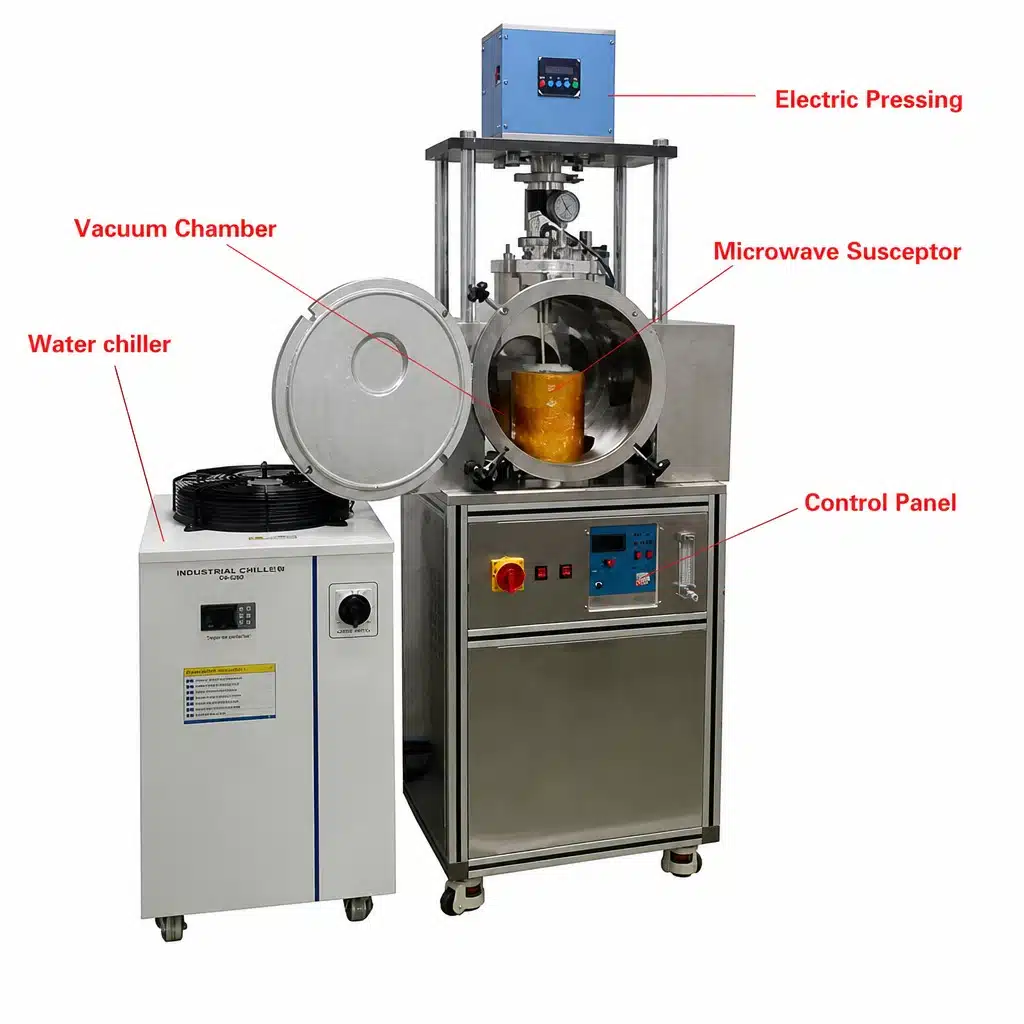
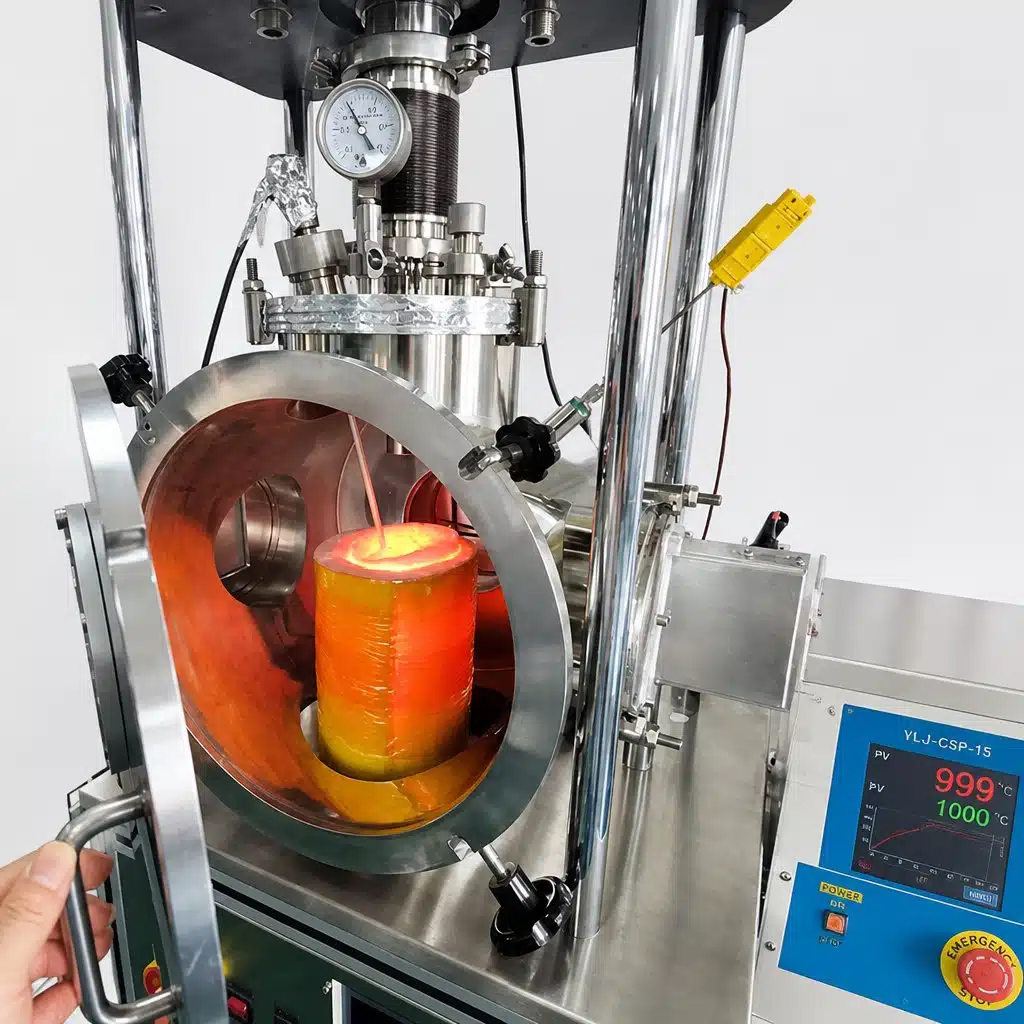
This furnace integrates a resistance heating system capable of reaching a maximum working temperature of 1350°C, with a heating element rated up to 1500°C under oxygen. The pressing mechanism is driven by a precision servo motor that can apply loads up to 2000 kgf, corresponding to pressures up to 100 MPa depending on the pressing area. The stainless steel vacuum chamber supports operation under vacuum (down to 10⁻⁵ Torr) or positive pressure up to 3 bar, with a quartz observation window for process monitoring.
Wichtigste Merkmale
- Resistance-heated furnace with maximum working temperature of 1350°C and heating element rated to 1500°C under oxygen
- Precision servo-driven pressing mechanism with maximum load of 2000 kgf and pressure control up to 100 MPa
- Supports pellet diameters from 10 to 12.7 mm using included silicon nitride pressing die (12 mm ID)
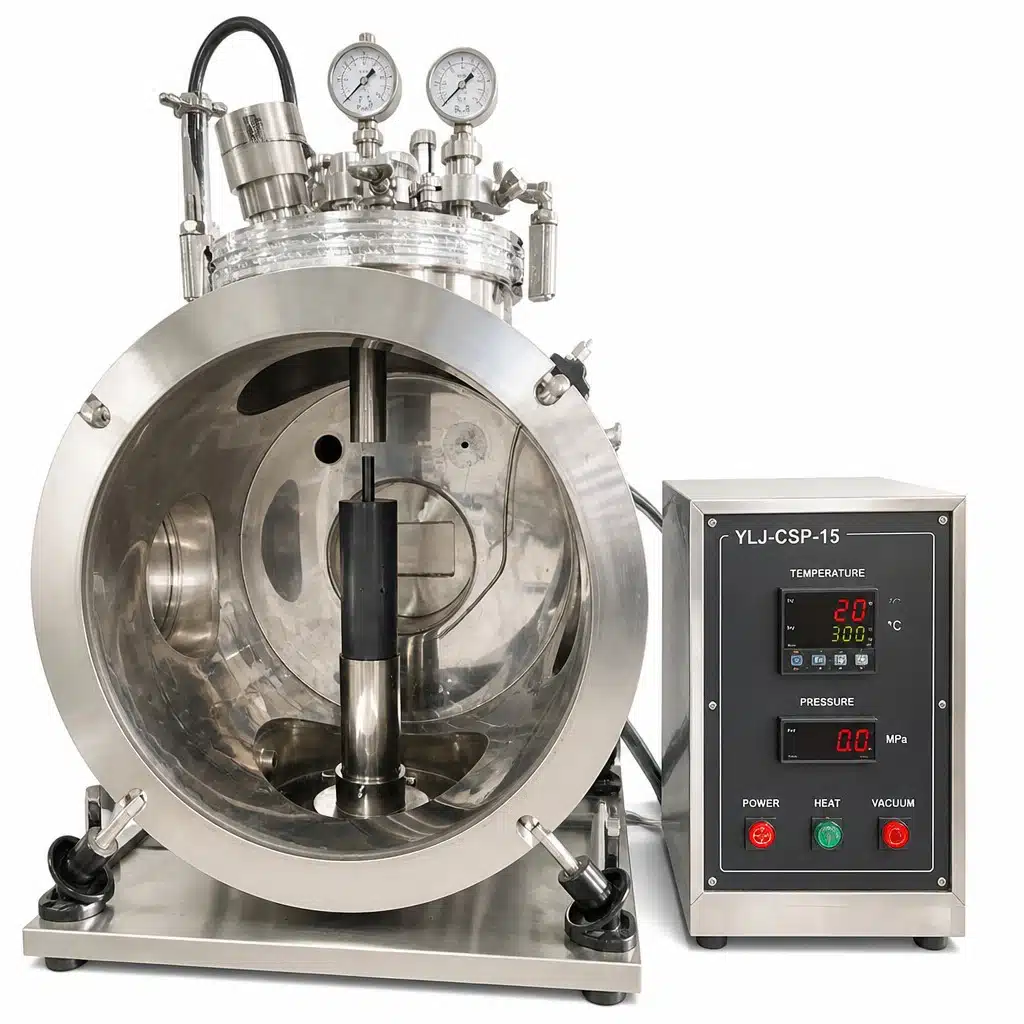
- Stainless steel vacuum chamber (Ø315 × 315 mm) with quartz observation window and vacuum ports (KF25, KF40)
- Operates under vacuum (down to 10⁻⁵ Torr) or positive pressure up to 3 bar, suitable for oxygen atmosphere processing
- Integrated touchscreen control panel with programmable temperature and pressure profiles, plus PC monitoring software via RS-485
- Includes KJ5300 digital recirculating water chiller for system cooling
Technische Daten
| Parameter | Spezifikation |
|---|---|
| Maximum Furnace Working Temperature | 1350°C (product overview), 1400°C (detailed specs) |
| Heating Element Type | Mo2Si coil resistance heater |
| Maximum Heating Element Temperature (Oxygen) | 1500°C |
| Erwärmungsgeschwindigkeit | Up to 20°C/min (overview), up to 100°C/min (detailed specs) |
| Genauigkeit der Temperaturregelung | ±2°C |
| Pressing Mechanism | Precision servo motor-driven |
| Maximum Applied Load | 2000 kgf |
| Pressing Pressure | Up to 100 MPa (dependent on pressing area) |
| Load Control Accuracy | ±0.5 kg |
| Included Pressing Die | Silicon nitride (Si3N4), 12 mm inner diameter |
| Pellet Diameter Range | 10–12.7 mm |
| Vacuum Chamber Material | Stainless steel |
| Chamber Internal Dimensions | Ø315 × 315 mm (H) |
| Sichtfenster | Quartz, 120 mm diameter |
| Vakuumanschlüsse | KF25 and KF40 at rear |
| Maximum Vacuum Level | 10⁻⁵ Torr |
| Maximum Positive Chamber Pressure | 3 bar |
| Stromversorgung | 208–240 V Wechselstrom, einphasig, 50/60 Hz |
| Rated Power | 5 kW |
| Temperaturregler | SCR controller with type B thermocouple, 30 programmable segments |
| Control Interface | Integrated touchscreen with PC monitoring software via RS-485 |
| Included Cooling | KJ5300 digital recirculating water chiller, 16 L/min flow, 6000 BTU/hr capacity |
Typische Anwendungsbereiche
Ideal for pressing and sintering ceramic and metallic pellets in research and development environments, especially for studying oxygen pressure effects on functional oxide ceramics. Suitable for materials science investigations requiring controlled atmosphere, high temperature, and high pressure pellet processing.
Hinweise zur Konfiguration und zum Betrieb
The standard package includes one silicon nitride pressing die with a 12 mm inner diameter. Dies for other pellet sizes are not included and must be sourced separately if needed. The vacuum pump is not included but can be requested as an option to achieve vacuum levels down to 10⁻⁵ Torr. Users should verify the applicable maximum furnace temperature, heating rate, and pressing pressure limits for their specific applications with the manufacturer. The system’s touchscreen interface allows precise control and monitoring of temperature, pressure, and vacuum conditions during operation.


