
GSL-1800X-PGEP Ultrasonic Spray Pyrolysis System with 1.7 MHz Aerosol Generator and High-Temperature Furnace up to 1800°C for Nanopowder Synthesis
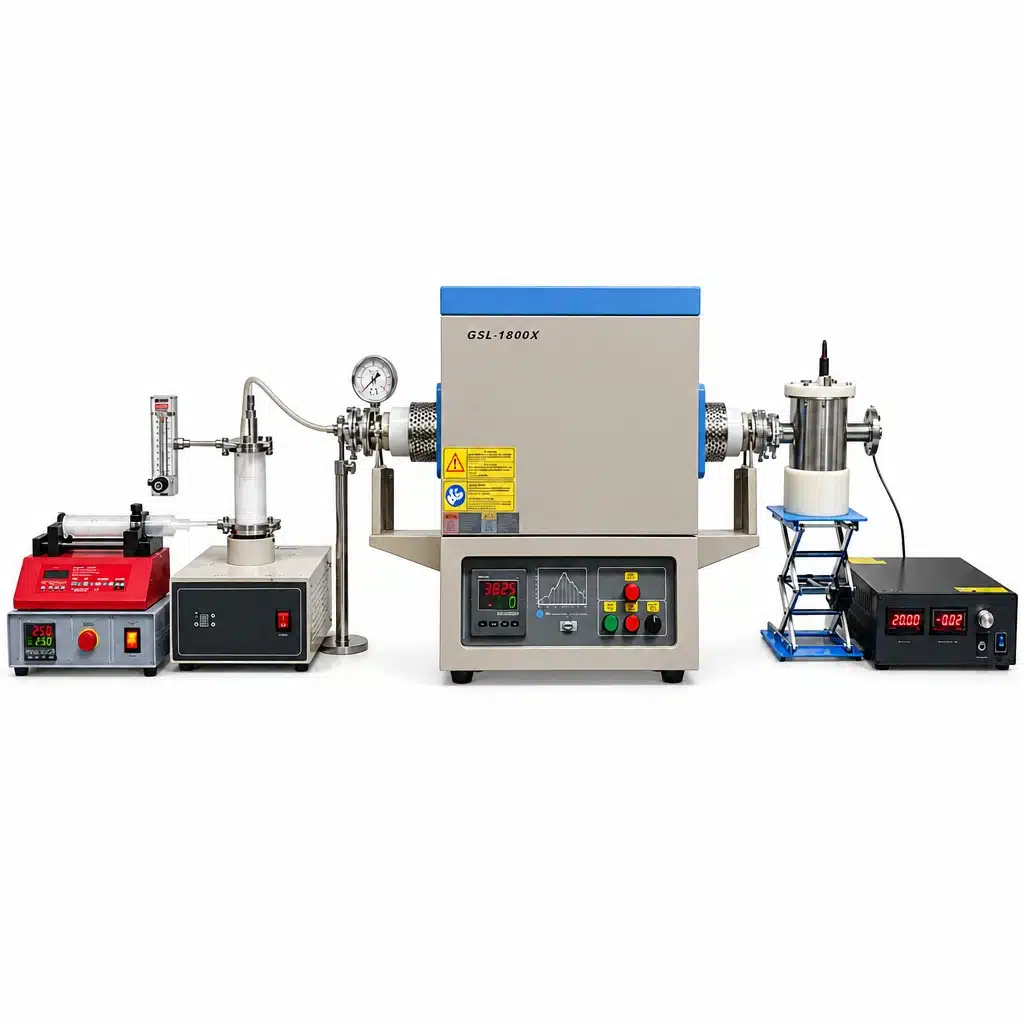
The GSL-1800X-PGEP system addresses the challenge of producing uniform nanostructured oxide and ceramic powders through controlled aerosol synthesis and thermal processing. It atomizes liquid precursors into fine droplets using a 1.7 MHz ultrasonic generator, enabling precise control over droplet size and distribution. These droplets are then transported into a high-temperature tube furnace where thermal decomposition occurs, forming nanopowders with tailored size and morphology.
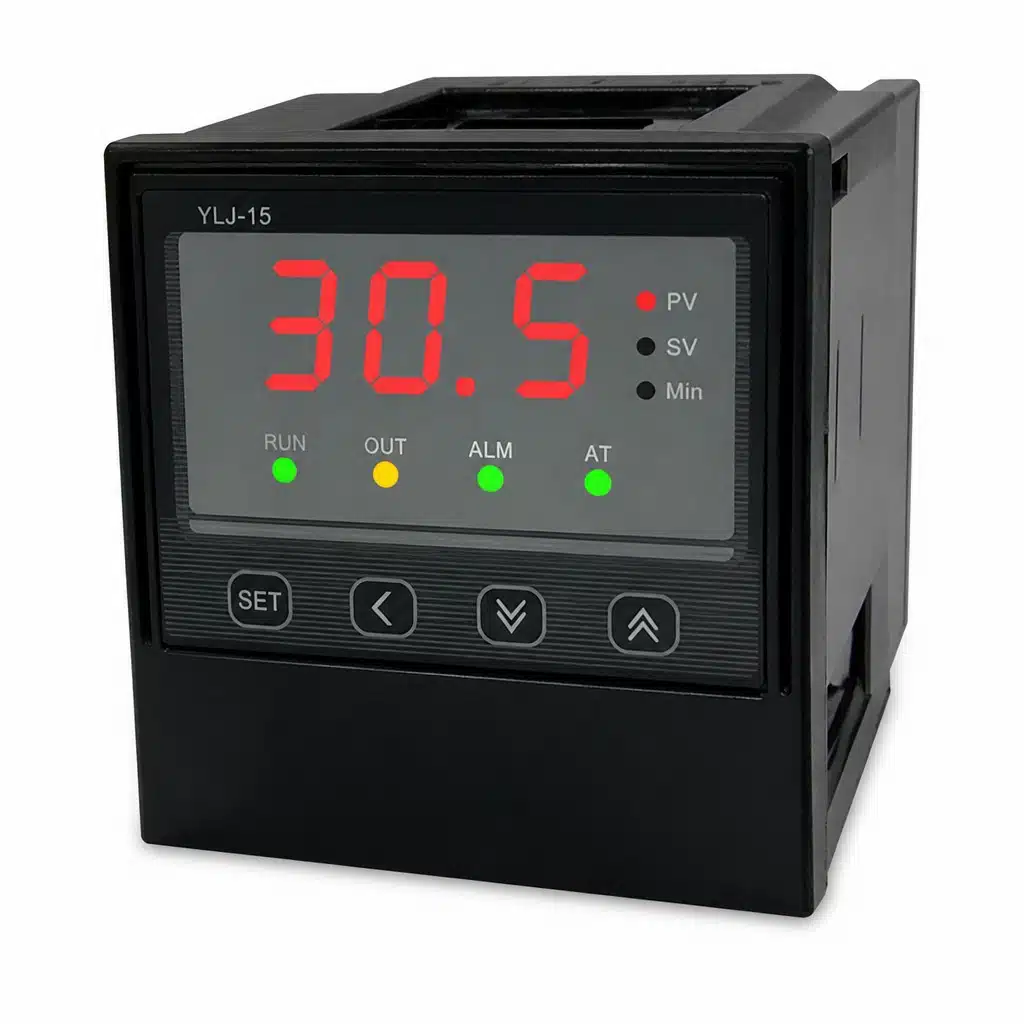
This system integrates three main modules: an ultrasonic aerosol generator, a tube furnace capable of continuous operation at 1750°C and short-term operation at 1800°C, and an electrostatic precipitator for efficient nanopowder collection. The furnace uses four Kanthal Super 1900-grade MoSi2 heating elements controlled by a Eurotherm 3000 Series programmable controller, ensuring precise temperature profiles with ±0.1°C accuracy. Two processing tubes made of high-purity alumina and mullite are included, supporting different temperature and gas flow requirements.
Wichtigste Merkmale
- 1.7 MHz ultrasonic aerosol generator producing droplets under 10 µm for fine particle control.
- High-temperature tube furnace with continuous operation up to 1750°C and peak operation at 1800°C.
- Electrostatic precipitator rated up to 30 kV and 1 mA for nanopowder collection.
- Programmable Eurotherm 3000 controller with 24-segment heating/cooling profiles and ±0.1°C accuracy.
- Two processing tubes: alumina (up to 1800°C) and mullite (up to 1500°C) included.
- Carrier gas flow control with standard floating flow meter and optional digital mass flow controller.
- High-voltage power supply with digital displays, arc protection, and constant voltage/current modes.
Technische Daten
| Parameter | Spezifikation |
|---|---|
| Furnace Power Supply | 208–240 VAC, single-phase, 50/60 Hz; max 2.5 kW; 30 A breaker required |
| Betriebstemperatur | 1750°C continuous; 1800°C for less than 1 hour |
| Heating & Cooling Rates | Max 5°C/min below 1600°C; max 2°C/min above 1600°C |
| Heating Zone Length | Total 12 inches; constant-temperature zone 3 inches (±1°C) |
| Heizelemente | 4 Kanthal Super 1900-grade MoSi2 elements |
| Temperaturregler | Eurotherm 3000 Series; 1 program with 24 segments; ±0.1°C accuracy |
| Processing Tubes | High-purity alumina (44 mm ID × 50 mm OD × 1200 mm L) and mullite (44 mm ID × 50 mm OD × 1398 mm L) |
| Carrier Gas Flow Limits | ≤100 sccm for alumina tube; ≤200 sccm for mullite tube |
| Ultrasonic Frequency | 1.7 MHz |
| Droplet Size | Less than 10 µm, depending on conditions |
| Ultrasonic Power Levels | Low: 0.2 mL/min; Medium: 0.4 mL/min; High: 0.6 mL/min liquid injection |
| Electrostatic Precipitator Rating | Up to 30 kV, 1 mA; approx. 1.2 L tubular collector |
| High-Voltage Power Supply Input | 208–240 VAC, single-phase; max 15 W input |
Typische Anwendungsbereiche
This system is suited for research and development of nanostructured oxide materials and ceramic nanopowders, including studies on particle size distribution, morphology, and microstructure. It supports applications in advanced ceramics, catalysts, sensors, and battery materials synthesis.
Hinweise zur Konfiguration und zum Betrieb
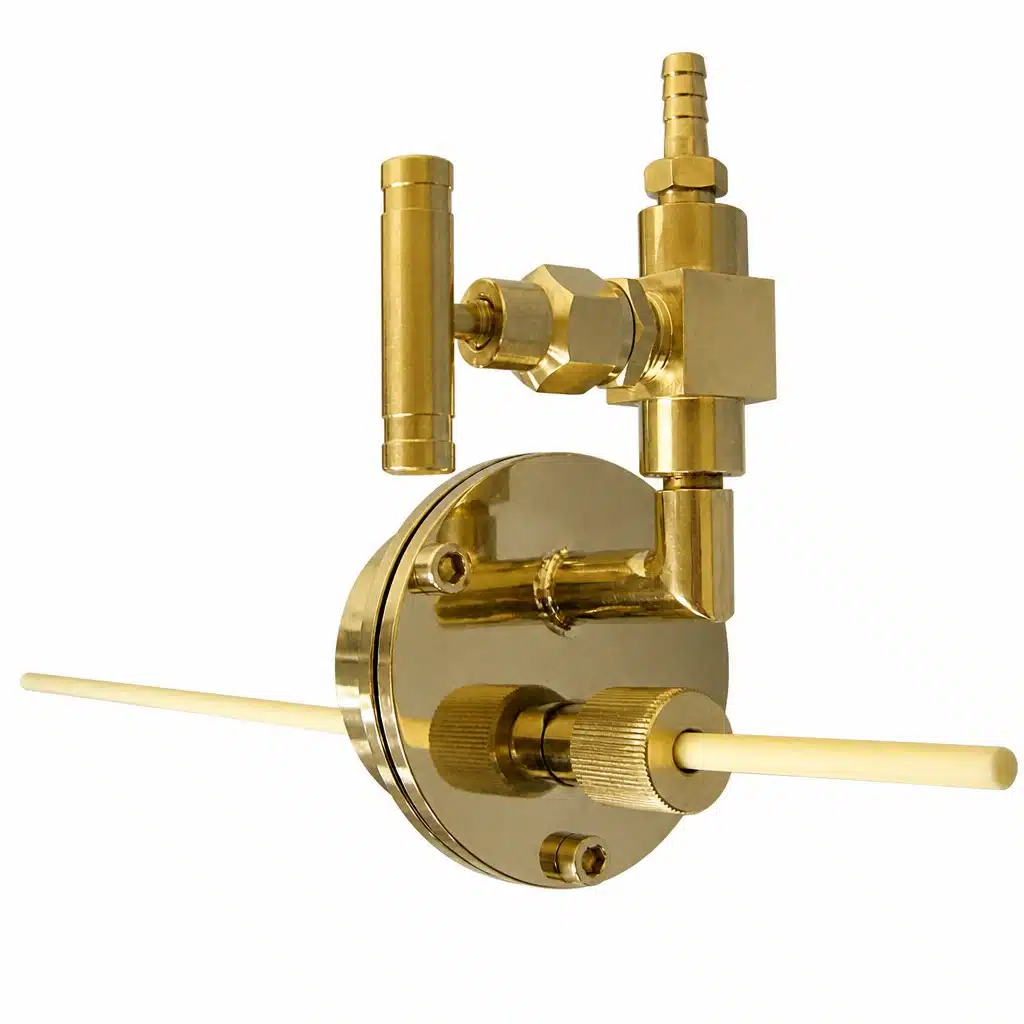
The system includes both alumina and mullite processing tubes with different temperature and gas flow limits. The ultrasonic aerosol generator features a PEEK base and a 316 stainless steel liquid container with fluoropolymer seals and heating tape. Carrier gas flow is controlled by a standard floating flow meter, with an optional digital mass flow controller available. The electrostatic precipitator requires a separate vacuum pump for nanopowder collection, which is not included.
Safety precautions include adhering to the precipitator’s maximum 30 kV rating, proper grounding, interlocks, and discharge procedures. The furnace temperature should not exceed 1800°C for more than one hour. Confirm the ultrasonic frequency and flange connections before ordering, as configurations may vary.


